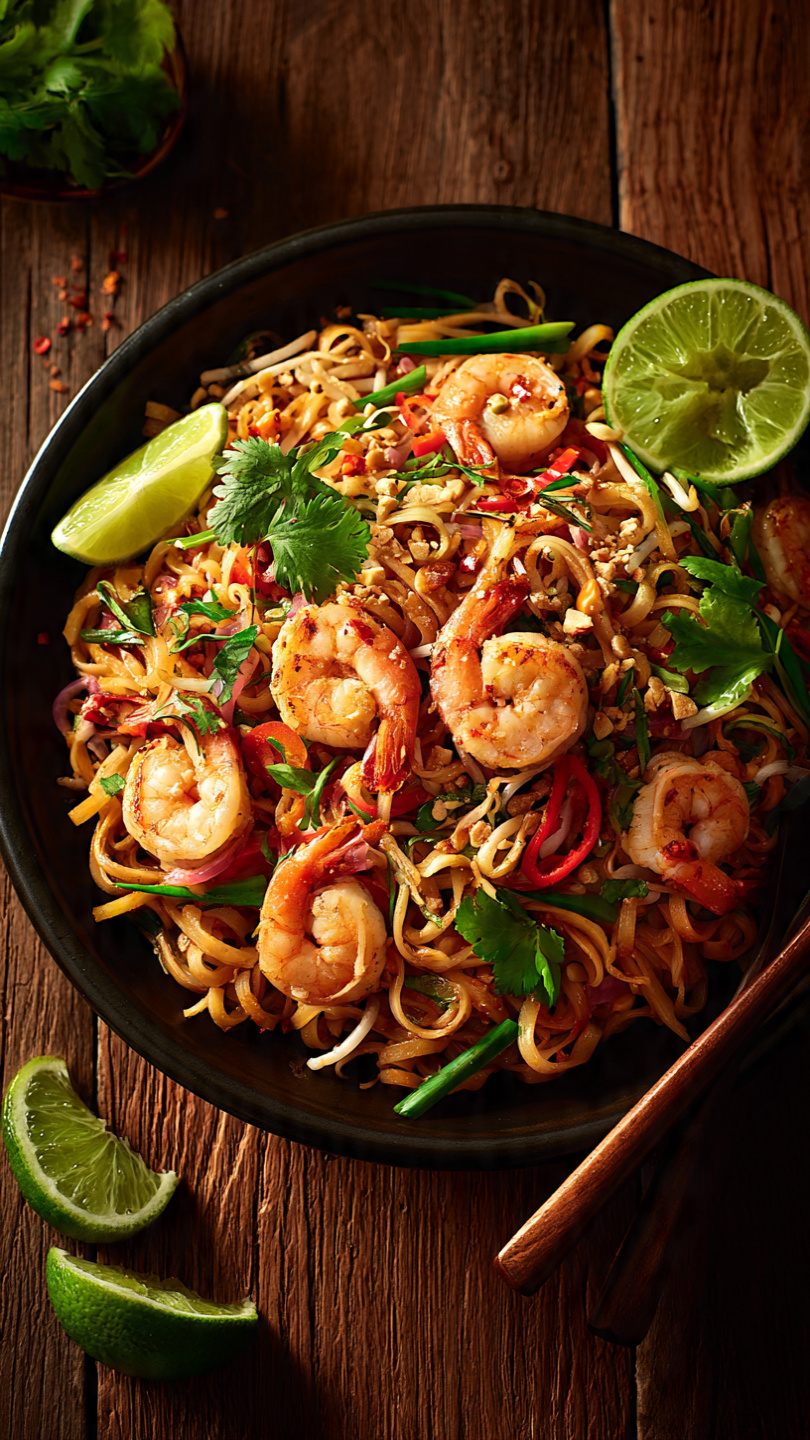
Shrimp Pad Thai (Better Than Takeout!)
This Shrimp Pad Thai is a restaurant-quality noodle dish you can make at home in under 30 minutes, packed with juicy shrimp, chewy rice noodles, and a bold, tangy-sweet sauce.

The Shrimp Pad Thai You Will Make on Repeat
If you have ever ordered Pad Thai from your favorite takeout spot and wondered whether you could pull it off at home, the answer is a confident yes. This Shrimp Pad Thai recipe delivers everything you love about the restaurant version: chewy rice noodles, plump juicy shrimp, that signature tangy-sweet-savory sauce, and a satisfying tangle of textures from crunchy peanuts and crisp bean sprouts. And the whole thing comes together in under 35 minutes.
Pad Thai is one of the most beloved noodle recipes in the world, and for good reason. It sits at the intersection of Asian cooking technique and crowd-pleasing flavor. Whether you are deep into exploring Chinese cooking recipes and branching into Southeast Asian territory, or you simply want a healthy dinner recipe that does not feel like a compromise, this dish delivers on every level.
What Makes a Great Pad Thai
The secret to Pad Thai that tastes like it came from a real Thai kitchen (not a sad, gummy imitation) comes down to three things:
- The sauce. A proper Pad Thai sauce leans on tamarind for its fruity, sour depth. This is what separates an authentic version from the ketchup-based shortcuts you might find in some recipes. Do not skip it.
- High heat. Pad Thai is a wok dish. You need screaming-hot heat to get that slight char on the noodles, which Thai cooks call wok hei. A cast iron skillet over your highest burner works if you do not have a wok.
- Mise en place. Everything happens fast once you start cooking. Chop, measure, and organize every single ingredient before you turn on the flame.
Chef's Tip: Do not overcook the shrimp. They go into the wok first, cook for about 2 minutes total, and come back out. They finish warming through when you fold them in at the end. Overcooked shrimp are rubbery and sad, and this recipe deserves better.
Ingredients Worth Caring About
For a dish this simple, ingredient quality matters more than you might expect. Good fish sauce, real tamarind paste (not a sweetened concentrate), and fresh shrimp are what separate a great Pad Thai from a forgettable one.
Having the right kitchen tools also speeds things up considerably. A large wok with proper heat distribution and a reliable set of tongs make tossing the noodles effortless.
The Noodles
Use flat rice noodles, sometimes labeled as rice stick noodles or banh pho noodles. Medium width (around 3mm to 5mm) is ideal for Pad Thai. Soak them in warm water for 25 to 30 minutes until they are pliable but still a little firm to the touch. They will finish cooking in the wok and you want them to absorb that sauce, not turn to mush.
The Sauce
This is where the magic lives. The combination of fish sauce, tamarind paste, oyster sauce, brown sugar, and a hit of sriracha creates a deeply layered flavor that is tangy, savory, subtly sweet, and just spicy enough. Mix it in advance and taste it. Adjust it until it makes you want to eat it with a spoon.
Tips for Healthy Food Dishes and Lightening It Up
Pad Thai has a reputation for being indulgent, but it is actually one of the more balanced healthy dinner recipes in the Asian cooking canon when made at home. Here is how to keep it on the lighter side:
- Use less oil. The recipe calls for 3 tablespoons total, which you can reduce to 2 if you are careful with a nonstick wok.
- Load up the vegetables. Double the bean sprouts, add shredded cabbage, julienned carrots, or baby bok choy alongside the noodles.
- Go easy on the peanuts. They add great flavor but also calories. A light sprinkle is plenty.
- Swap in whole grain rice noodles if you can find them, for a small fiber boost.
This is the kind of healthy food dish that genuinely does not taste like health food. It tastes like the best takeout you have ever had.
A Quick Note on Asian Cooking Technique
If this is your first time cooking in the style of Asian cooking or Chinese cooking recipes that use a wok at high heat, a few things to keep in mind. First, have everything ready before you heat the pan. Once that wok is hot, the whole dish takes about 12 minutes from start to finish. Second, resist the urge to stir constantly. Let the noodles sit against the hot surface for 20 to 30 seconds at a time to develop that slightly caramelized edge. Third, the egg step feels awkward the first time but becomes second nature quickly. Push the noodles aside, scramble the eggs in the open space, and fold them in while still slightly soft.
Ready to bring it all together? Here is the full step-by-step recipe:
Shrimp Pad Thai (Better Than Takeout!)
This Shrimp Pad Thai is a restaurant-quality noodle dish you can make at home in under 30 minutes, packed with juicy shrimp, chewy rice noodles, and a bold, tangy-sweet sauce.
Ingredients
- 8 oz flat rice noodles, medium width, soaked in warm water 30 minutes then drained
- 1 lb large shrimp, peeled and deveined, tails on or off
- 3 tbsp fish sauce
- 2 tbsp tamarind paste, or tamarind concentrate
- 1 tbsp oyster sauce
- 2 tbsp brown sugar, packed
- 1 tsp sriracha, adjust to taste
- 3 tbsp vegetable oil, divided
- 4 garlic cloves, minced
- 2 shallots, thinly sliced
- 3 large eggs, lightly beaten
- 1 1/2 cups bean sprouts, fresh
- 4 green onions, sliced, white and green parts separated
- 1/2 cup dry roasted peanuts, roughly chopped
- 2 lime, cut into wedges for serving
- 1/4 cup fresh cilantro, for garnish, optional
Instruction
Soak the rice noodles in a large bowl of warm (not boiling) water for 25 to 30 minutes until pliable but still slightly firm. Drain well and set aside.
In a small bowl, whisk together the fish sauce, tamarind paste, oyster sauce, brown sugar, and sriracha until the sugar dissolves. Taste and adjust the balance of sweet, sour, and salty to your liking. Set the sauce aside.
Heat 1 tablespoon of vegetable oil in a large wok or 12-inch skillet over high heat until shimmering. Add the shrimp in a single layer and cook for 1 to 2 minutes per side until pink and just cooked through. Transfer to a plate and set aside.
Add another tablespoon of oil to the same wok over high heat. Add the shallots and the white parts of the green onions and stir-fry for 1 minute until softened. Add the minced garlic and cook for 30 seconds until fragrant.
Add the drained noodles and pour the prepared sauce over them. Toss everything together using tongs, cooking for 2 to 3 minutes until the noodles absorb the sauce and start to caramelize slightly at the edges.
Push the noodles to one side of the wok and add the remaining tablespoon of oil to the empty space. Pour in the beaten eggs and scramble them gently, breaking them into small pieces. Once just set, fold them into the noodles.
Return the cooked shrimp to the wok. Add the bean sprouts and the green parts of the green onions. Toss everything together over high heat for 1 minute. The sprouts should stay slightly crisp.
Divide among four bowls and top generously with chopped peanuts, fresh cilantro, and extra lime wedges. Serve immediately with additional sriracha, fish sauce, and sugar on the side for guests to customize.
Equipment
- Large wok or 12-inch cast iron skillet
- Large mixing bowl (for soaking noodles)
- Small bowl (for sauce)
- Tongs or long chopsticks
- Sharp chef's knife
- Cutting board
Notes
How to Serve and Customize Your Pad Thai
Pad Thai is best served the moment it comes out of the wok, piled high with toppings. Set out small bowls of the classic Thai condiment quartet at the table: extra fish sauce, white sugar, dried chili flakes, and white vinegar. This is how Thai restaurants let diners personalize every bowl, and it makes the whole experience feel a little more special.
Topping ideas:
- Crushed dry roasted peanuts
- Fresh lime wedges (squeeze generously)
- Sliced fresh chilies or chili oil
- Fresh cilantro or Thai basil
- Extra bean sprouts
For a full spread, pair this with a simple cucumber salad or a bowl of tom kha soup. If you are feeding a crowd, this recipe scales up beautifully. Just cook the shrimp and noodles in two separate batches to avoid overcrowding the wok, then combine everything at the end.
However you serve it, this Shrimp Pad Thai is the kind of recipe that makes people forget takeout exists.