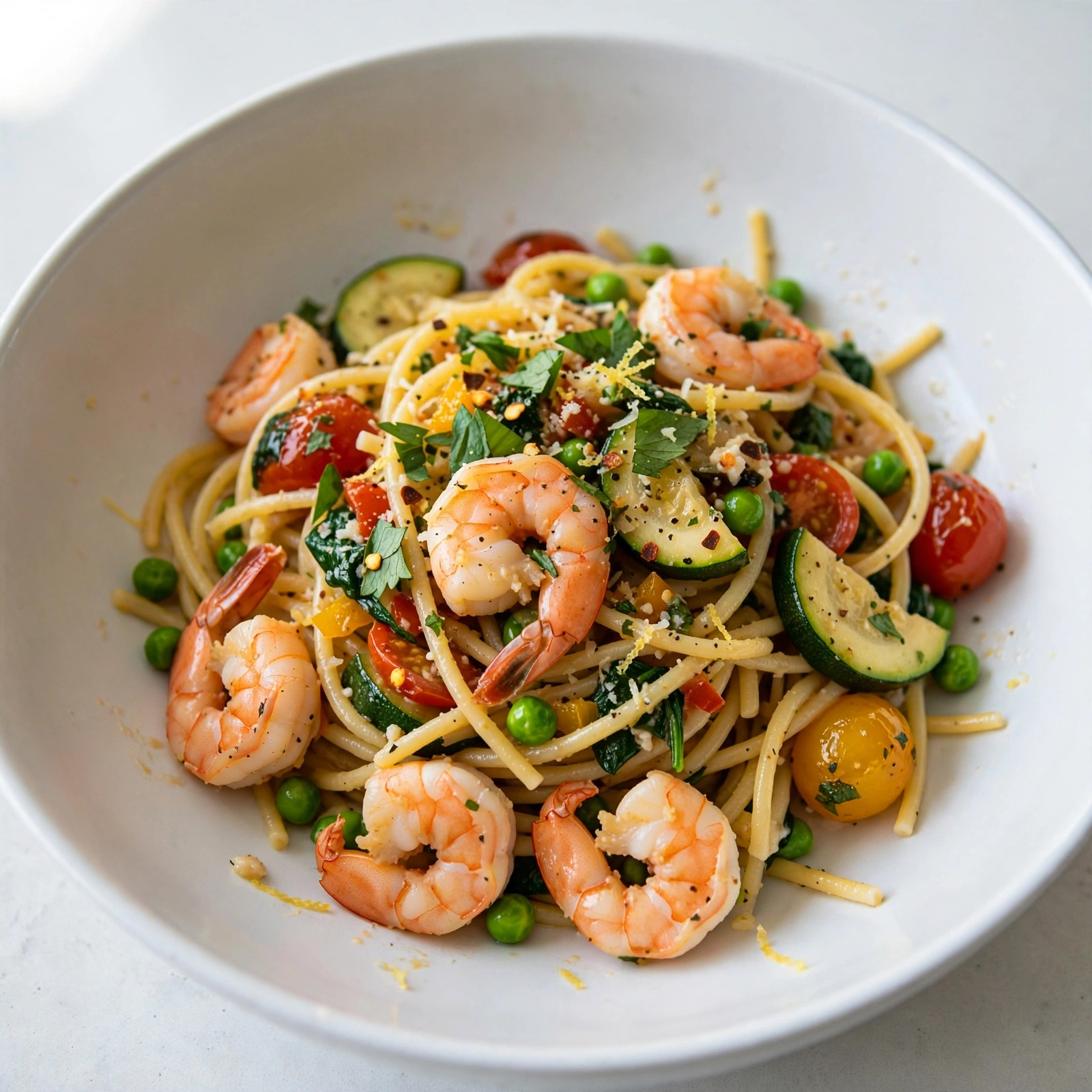
One Pot Shrimp Pasta Primavera
This One Pot Shrimp Pasta Primavera is a vibrant, creamy weeknight dinner packed with tender shrimp, crisp spring vegetables, and perfectly cooked pasta, all made in a single pan for easy cleanup.

The One Pot Shrimp Pasta Primavera You Will Make on Repeat
If weeknight dinners sometimes feel like a choice between fast and actually good, this One Pot Shrimp Pasta Primavera is here to prove you do not have to pick. It is bright, creamy, loaded with fresh spring vegetables, and on the table in about 40 minutes. Better yet, everything happens in a single pan, which means minimal cleanup and maximum flavor, because all those gorgeous browned bits from the shrimp stay right where they belong: in your sauce.
This is the kind of seafood pasta primavera that tastes like something from a neighborhood Italian restaurant, but it is genuinely weeknight-friendly. Light enough to feel fresh, rich enough to feel indulgent. The asparagus and cherry tomatoes bring color and brightness, the shrimp bring sweetness and protein, and a splash of white wine and lemon tie everything together with that little bit of acidity that makes a good pasta sauce great.
Why the One Pot Method Works So Well Here
Traditional pasta primavera with shrimp recipes often call for boiling the pasta separately, sautéing the vegetables in another pan, and cooking the shrimp in yet another. The one pot approach flips that entirely. The pasta cooks directly in the broth and cream, absorbing every layer of flavor as it goes. The starch it releases naturally thickens the sauce, so you get that silky, restaurant-style consistency without a separate cream reduction step.
It also means that every single element gets coated in the same savory, garlicky, lemony sauce. The asparagus and bell pepper have just enough time to soften without going limp. The cherry tomatoes burst slightly and add tiny pockets of sweetness throughout. It all works together in a way that feels effortless because, honestly, it kind of is.
Chef's Tip: The number one rule with shrimp pasta primavera is to cook your shrimp first, pull them out, and add them back at the very end. Shrimp go from perfect to rubbery in about 90 seconds, and they will absolutely overcook if you leave them in while the pasta finishes. Pull them early, and you will be rewarded.
Getting the Best Results: Tools and Ingredients That Matter
For a one pot pasta recipe like this, the pan you choose genuinely changes the outcome. A wide, deep skillet or a Dutch oven gives the pasta enough room to cook evenly and allows the liquid to reduce properly without pooling too deep. Using a good-quality Parmesan, freshly grated rather than pre-shredded, also makes a noticeable difference in how smoothly the cheese melts into the sauce.
Building Flavor From the Bottom Up
Even though this is a simple pasta primavera with shrimp recipe, there are a few small moves that add up to something that tastes really considered.
Start with dry shrimp. Pat them with paper towels before they hit the pan. Moisture is the enemy of a good sear, and a good sear means more flavor in the final dish.
Do not skip the wine. That half cup of white wine might seem minor, but it deglazes the pan, picks up all the browned bits from the shrimp, and adds a gentle acidity that keeps the cream sauce from feeling heavy. No wine? No problem. Just use extra chicken broth.
Stir the pasta regularly. Unlike boiling pasta in a large pot of water, pasta cooked in a smaller amount of liquid can stick together or to the bottom of the pan if left alone too long. A stir every two to three minutes keeps everything moving and ensures even cooking.
Finish with lemon. Both the zest and juice go in right at the end, off the heat. This is what lifts the whole dish and makes a creamy shrimp pasta primavera taste fresh instead of heavy.
Variations Worth Trying
One of the best things about this seafood pasta primavera is how adaptable it is to whatever you have on hand.
- Swap the protein. Scallops, crab, or even rotisserie chicken work in place of shrimp for equally satisfying shrimp primavera dinner ideas.
- Go lighter. Replace the heavy cream with half-and-half or even a ladleful of reserved pasta water for a thinner, brighter sauce.
- Add heat. A generous pinch of red pepper flakes or a spoonful of Calabrian chili paste gives this a bold, spicy edge.
- Change the pasta shape. Linguine, rigatoni, farfalle, or even orzo all work well. Just adjust the liquid and cook time slightly depending on the shape.
- Pile on the vegetables. Snap peas, broccoli florets, fresh corn, or baby spinach are all at home in a creamy shrimp pasta primavera. Add firmer vegetables early and tender greens in the final minute of cooking.
What to Serve Alongside
This pasta is hearty enough to stand alone, but a few simple sides turn it into a proper spread. A crisp green salad with a sharp lemon vinaigrette balances the richness of the cream. Warm crusty bread is practically mandatory for sweeping up any sauce left in the bowl. A chilled glass of the same white wine you used in the recipe is never a bad idea either.
For a full shrimp primavera dinner, you could start with a simple bruschetta or a light soup, but honestly, most nights this dish carries the whole meal beautifully on its own.
Ready to bring it all together? Here is everything you need to make it at home:
One Pot Shrimp Pasta Primavera
This One Pot Shrimp Pasta Primavera is a vibrant, creamy weeknight dinner packed with tender shrimp, crisp spring vegetables, and perfectly cooked pasta, all made in a single pan for easy cleanup.
Ingredients
- 1 lb large shrimp, peeled and deveined, fresh or thawed from frozen
- 12 oz penne or linguine pasta, uncooked
- 2 tbsp olive oil, extra virgin, divided
- 2 tbsp unsalted butter
- 5 garlic cloves, minced
- 1 cup cherry tomatoes, halved
- 1 lb asparagus, woody ends trimmed, cut into 2-inch pieces
- 1 zucchini, medium, halved lengthwise and sliced
- 1 yellow bell pepper, seeded and thinly sliced
- 3 cups low-sodium chicken broth
- 1/2 cup heavy cream, or half-and-half for a lighter version
- 1/2 cup dry white wine, such as Pinot Grigio, or substitute extra broth
- 3/4 cup Parmesan cheese, freshly grated, plus more for serving
- 1 lemon, zested and juiced
- 1/2 tsp red pepper flakes, adjust to taste
- 1 tsp kosher salt, plus more to taste
- 1/2 tsp black pepper, freshly ground
- 1/4 cup fresh basil leaves, loosely packed, torn, for garnish
- 2 tbsp fresh parsley, chopped, for garnish
Instruction
Pat the shrimp dry with paper towels and season lightly with salt, black pepper, and a pinch of red pepper flakes. Set aside.
Heat 1 tablespoon of olive oil in a large, deep skillet or Dutch oven over medium-high heat. Add the shrimp in a single layer and cook for 1 to 2 minutes per side until just pink and opaque. Do not overcook. Transfer the shrimp to a plate and set aside.
Reduce the heat to medium and add the remaining 1 tablespoon of olive oil and the butter to the same pan. Once the butter melts, add the garlic and red pepper flakes. Sauté for about 60 seconds until fragrant, stirring constantly so the garlic does not burn.
Add the bell pepper and zucchini to the pan. Cook for 2 to 3 minutes, stirring occasionally, until they begin to soften slightly.
Pour in the white wine and scrape up any browned bits from the bottom of the pan. Let it simmer for 1 to 2 minutes until the wine reduces by about half.
Add the chicken broth, heavy cream, uncooked pasta, and 0.5 teaspoon of salt. Stir well to combine. Bring the mixture to a boil, then reduce the heat to a steady simmer. Cook uncovered, stirring every 2 to 3 minutes, for about 10 minutes.
Add the asparagus pieces and cherry tomatoes. Stir to incorporate and continue cooking for 4 to 5 more minutes, or until the pasta is al dente and has absorbed most of the liquid. If the pan looks too dry before the pasta is done, add a splash of broth or water.
Remove the pan from the heat. Stir in the Parmesan cheese, lemon zest, and lemon juice. Taste and adjust seasoning with salt and pepper.
Return the cooked shrimp to the pan and gently fold them in. Let everything sit for 1 to 2 minutes so the shrimp can warm through without overcooking.
Serve immediately, topped with fresh basil, parsley, and extra Parmesan cheese.
Equipment
- Large deep skillet or Dutch oven (at least 12 inches wide)
- Tongs
- Wooden spoon or silicone spatula
- Cutting board and chef's knife
- Microplane or fine zester
- Measuring cups and spoons
- Ladle or large serving spoon
Notes
Storing and Reheating
Leftovers keep in an airtight container in the refrigerator for up to 3 days. The pasta will absorb more of the sauce as it sits, so when you reheat it, add a few tablespoons of chicken broth or water and warm it gently over low heat on the stovetop, stirring frequently. The shrimp are already fully cooked, so you just need to bring everything up to temperature without pushing too hard.
This particular dish does not freeze well. The cream sauce tends to separate when thawed, and the shrimp can become tough. It is best enjoyed fresh or within a few days of cooking.
If you are meal prepping for the week, consider cooking the shrimp and vegetables separately and storing them with cooked pasta, then combining and warming everything together when you are ready to eat. It keeps the textures at their best.
Make-Ahead Tip: All your vegetables can be chopped and stored in the fridge up to a day ahead. The shrimp can be peeled, deveined, and kept covered in the refrigerator for up to 24 hours before cooking. When dinner time comes, the actual cooking goes very quickly.