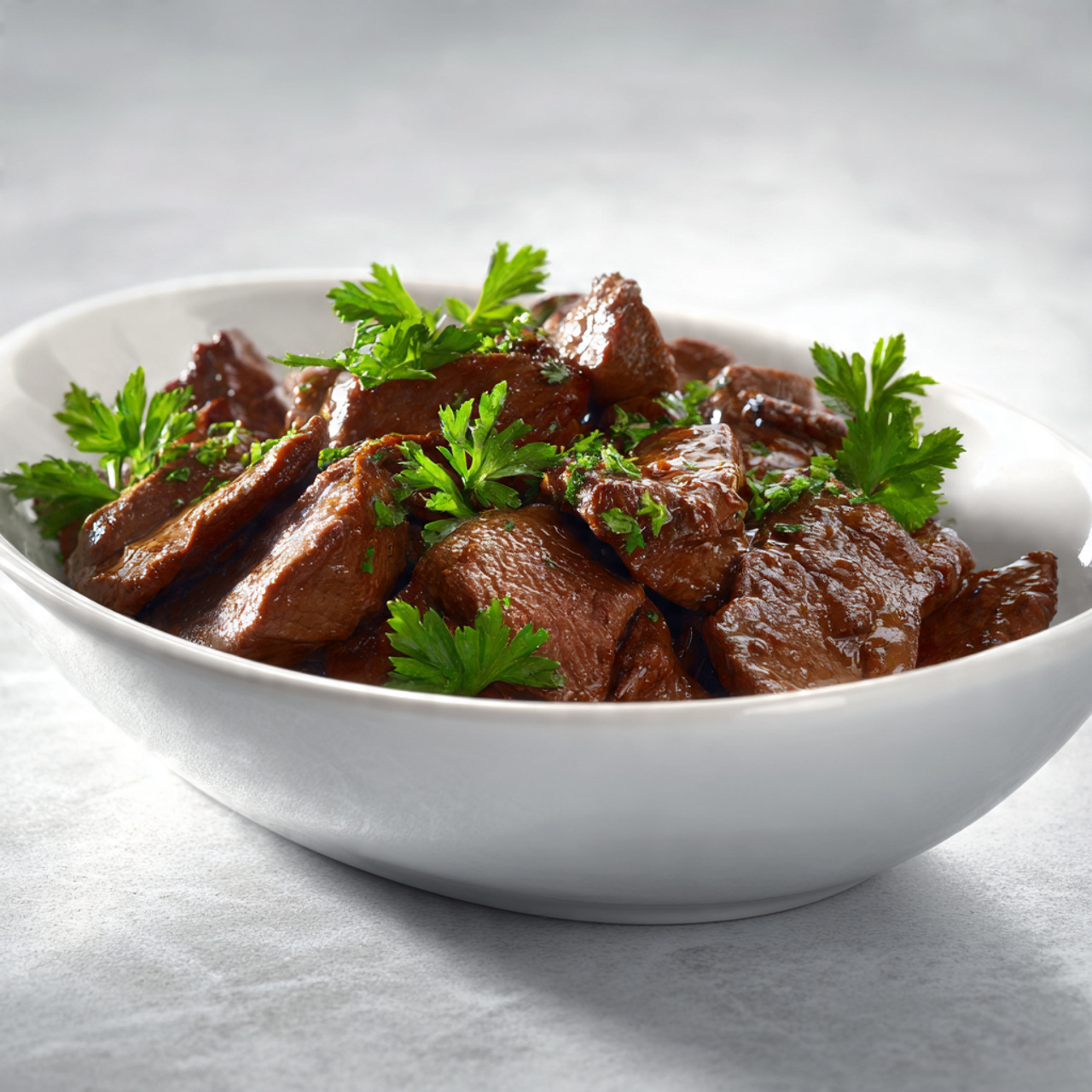
The Absolute Best Beef Liver and Onions Recipe
Learn how to cook beef liver and onions the right way, tender, rich, and full of savory flavor. This foolproof recipe transforms a misunderstood cut into a deeply satisfying, nutritious meal.

The Absolute Best Beef Liver and Onions (And Yes, You Will Love It)
Beef liver has a reputation problem. Somewhere along the way, a generation of home cooks got served a grey, rubbery, aggressively metallic slab and never looked back. That version of liver deserves its bad reviews. This version does not.
Done right, beef liver is silky, deeply savory, and rich in a way that very few other proteins can match. Draped in jammy caramelized onions with a beautifully seared crust, it is the kind of meal that surprises people. The kind where someone takes a skeptical bite and then quietly goes back for more.
This recipe covers everything: how to prepare and cook beef liver properly, why the milk soak is non-negotiable, and how to nail that perfect internal texture every single time.
Why Eating Beef Liver Is Worth Reconsidering
Before we talk technique, let's talk about why organ meat recipes like this one are having a serious comeback. Beef liver is one of the most nutrient-dense foods on the planet. A single serving delivers a massive dose of vitamin B12, iron, folate, zinc, and high-quality complete protein, all at a fraction of the cost of a premium steak.
For anyone curious about beef organs as part of a whole-foods diet, liver is the obvious starting point. Even elk liver, which has a slightly more pronounced wild flavor, follows the same preparation principles. Once you understand the technique, the cut is endlessly versatile.
Chef's Note: If you are nervous about the flavor, start with calf's liver. It is genuinely milder and more tender than mature beef liver, making it an ideal gateway into cooking liver and onions for the first time.
The Tools and Ingredients That Actually Matter Here
A cast iron skillet is not just a suggestion for this recipe. It is the difference between a beautifully seared crust and a grey, steamed disappointment. You also want a sharp knife for trimming membrane and a wide shallow dish for the milk soak. Getting these details right costs nothing extra but changes everything about the outcome.
How To Prepare Beef Liver Before It Ever Hits the Pan
This is where most home cooks go wrong, and it is entirely fixable.
Step 1: Trim it properly. Look at your liver slices and you will likely see a thin, silvery membrane along the edges and possibly some larger sinew or connective tissue running through. Pull and cut all of that away. It does not break down during cooking and creates a tough, chewy bite.
Step 2: Soak it in milk. Place your trimmed slices in a shallow bowl, pour over enough whole milk to submerge them, and let it sit for at least 15 minutes. Thirty to sixty minutes is better. The milk draws out the compounds responsible for bitterness and that sharp, metallic edge. Drain, rinse lightly if you like, then pat completely dry before cooking.
Step 3: Do not skip the dredge. A light coating of seasoned flour creates a thin crust that protects the delicate interior from the heat, promotes even browning, and helps the pan sauce cling to every bite.
Warning: Wet liver will not sear. It will steam. Pat those slices bone dry before they go anywhere near the flour or the pan.
The Secret to Cooking Liver Without Ruining It
The absolute best liver and onions comes down to two things: hot pan and short time.
Liver is a lean, dense protein. Unlike a fatty ribeye, it has almost no internal fat to keep it moist if it overcooks. Go past that sweet spot and it turns chalky and gritty almost instantly. Here is what you are aiming for:
- Pan temperature: Medium-high heat with a mix of butter and oil. The butter gives flavor, the oil raises the smoke point.
- Cooking time: 2 to 3 minutes per side for half-inch slices. That is it.
- Internal cue: The center should still show the faintest blush of pink when you pull it. Carryover heat will finish the job on the plate.
The caramelized onions, which take about 20 minutes of patient, low-heat cooking, should be done before the liver ever touches the pan. Once the liver is seared, everything comes together in under 5 minutes.
Ready to make it? Here is the full step-by-step recipe:
The Absolute Best Beef Liver and Onions Recipe
Learn how to cook beef liver and onions the right way, tender, rich, and full of savory flavor. This foolproof recipe transforms a misunderstood cut into a deeply satisfying, nutritious meal.
Ingredients
- 1 1/2 lb beef liver, sliced 0.5-inch thick, membrane and sinew removed
- 1 cup whole milk, for soaking
- 2 large yellow onions, thinly sliced into half-rings
- 1/2 cup all-purpose flour, for dredging
- 3 tbsp unsalted butter, divided
- 2 tbsp olive oil, divided
- 3 garlic cloves, minced
- 1/4 cup beef broth, low sodium
- 1 tsp fresh thyme, or 0.5 tsp dried
- 1 tsp kosher salt, to taste
- 1/2 tsp black pepper, freshly ground
- 2 tbsp fresh flat-leaf parsley, chopped, for garnish
Instruction
Place the sliced beef liver in a shallow dish and pour the milk over it. Let it soak for at least 15 minutes, or up to 1 hour in the refrigerator. This step draws out bitterness and dramatically improves the flavor.
While the liver soaks, heat 1 tablespoon of butter and 1 tablespoon of olive oil in a large, heavy skillet over medium-low heat. Add the sliced onions with a pinch of salt and cook, stirring occasionally, for 18 to 22 minutes until deeply golden and caramelized. Add the minced garlic in the last 2 minutes. Transfer onions to a plate and set aside.
Remove the liver from the milk and pat each slice completely dry with paper towels. Season both sides generously with salt and black pepper.
Spread the flour in a shallow dish. Dredge each liver slice lightly in the flour, shaking off any excess.
Increase the skillet heat to medium-high. Add the remaining butter and olive oil. Once the butter is foaming and hot, add the liver slices in a single layer without crowding the pan. Cook for 2 to 3 minutes per side, depending on thickness. The liver is done when it is browned on the outside and just barely pink in the center. Do not overcook.
Remove the liver from the pan and set it on a warm plate. Deglaze the pan with the beef broth, scraping up any browned bits. Let it reduce for 30 seconds.
Return the caramelized onions to the pan and stir to coat them in the pan drippings. Add the fresh thyme and toss to combine.
Plate the liver, spoon the caramelized onion mixture generously over the top, and garnish with chopped fresh parsley. Serve immediately.
Equipment
- Large heavy-bottomed skillet or cast iron pan
- Shallow dish for soaking
- Shallow dish for dredging
- Paper towels
- Tongs
- Cutting board
- Sharp chef's knife
Notes
How To Serve Beef Liver and Onions
This dish is deeply savory and benefits from something starchy alongside it to balance the richness. Classic pairings include:
- Creamy mashed potatoes for the ultimate comfort food plate
- Buttered egg noodles tossed with a little parsley
- Crusty sourdough bread to mop up every bit of that onion pan sauce
- Steamed or roasted green beans for something lighter and brighter
A simple green salad with a sharp vinaigrette also works beautifully as a counterpoint to the richness of the liver.
Storing and Reheating
Leftover liver keeps in the fridge for up to 2 days in an airtight container. Reheat it gently in a covered skillet over low heat with a splash of beef broth. It will not be quite as pristine as fresh, but it holds up far better than most people expect. Avoid the microwave if you can.
If you have been on the fence about cooking liver and onions, this is the recipe that will change your mind. It is simple, fast, extraordinarily nutritious, and when those caramelized onions go over the top of a perfectly seared slice, it is genuinely one of the most satisfying plates of food you can put on a weeknight table.